Treating Spinal Cord Tumors With Proton Therapy
Abnormal cells that grow out of control in the spinal cord are classified as spinal cord tumors. Tumors in the spine are designated as benign or noncancerous and likely not life-threatening, or malignant, which are cancerous and dangerous as they can spread throughout the body.
Tumors in the spinal cord are more likely to spread, and even if benign, can impact or destroy normal tissue, which can become life-threatening. Similarly, both benign and malignant spinal cord tumors can be life-threatening.
In many cases, proton therapy is the optimal treatment option for tumors in the spine. With proton therapy, a concentrated dose of radiation is applied directly to the tumor, avoiding impact on the nerves that control the ability to see, hear and move, and limiting exposure on vital, healthy cells around the spine. Traditional radiation or photon therapy can expose these nearby areas to unnecessary high doses of radiation.
Proton therapy is a method of choice to limit exposure to other organs and tissues, especially for pediatric patients, who have many decades of life remaining. Protons are also used to treat recurrent brain and spinal cord tumors that were previously treated with traditional X-ray radiation therapy.
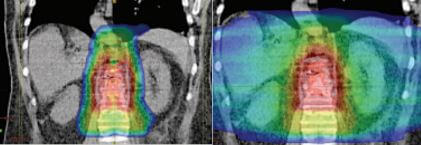
Comparison image – Proton Therapy is on the left, Photon Therapy is on the right
The Maryland Proton Treatment Center (MPTC) Treats a Variety of Spinal Tumors with Proton Therapy:
- Chordomas
- Chondrosarcomas
- Metastatic tumors
- Ependymomas
- Ewing’s sarcomas
- Sarcomas
Understanding the Proton Therapy Treatment Process
At the Maryland Proton Treatment Center, every spine cancer treatment plan is customized to your unique diagnosis and health needs. We aim to deliver highly targeted care while supporting your comfort and well-being.
Here’s what you can expect:
Initial Consultation: During your initial consultation, you will meet with our expert team, including a radiation oncologist, to review your medical history and determine if proton therapy is right for you. Our radiation oncologists are trained to deliver radiation in a variety of modalities, which means they can discuss all radiation options to ensure you are comfortable with your care plan. If proton therapy is right for you, our billing department will help find out if your insurance covers proton therapy.
CT Simulation and Treatment Planning: We use advanced imaging to map your tumor and design a precise, personalized plan. These scans help us prepare your body position to ensure accurate proton therapy treatment.
Daily Treatment: Proton therapy begins within two weeks of the simulation. These outpatient sessions are typically 30 minutes, five days a week, with most patients returning to daily activities right after. The length of treatment depends on your specific treatment plan but generally lasts three to eight weeks.
Completion: Upon completing your last treatment, you will ring the bell at the “Ring in Hope” wall, a symbol that closes the door on this chapter of life and opens the door to a healthy future.
Follow-Up and Ongoing Monitoring: Within a month of your final treatment, you will come back for a follow-up visit to track your progress. Following that, imaging and regular check-ins help us further track your progress and make any needed adjustments.